

Moving house with children is usually easier when they know what to expect, have a small role in the process, and can keep familiar routines and belongings close. The right approach also changes with age: toddlers need predictability, primary age children often worry about friends and school, and teenagers may need more say over decisions that affect their social lives.
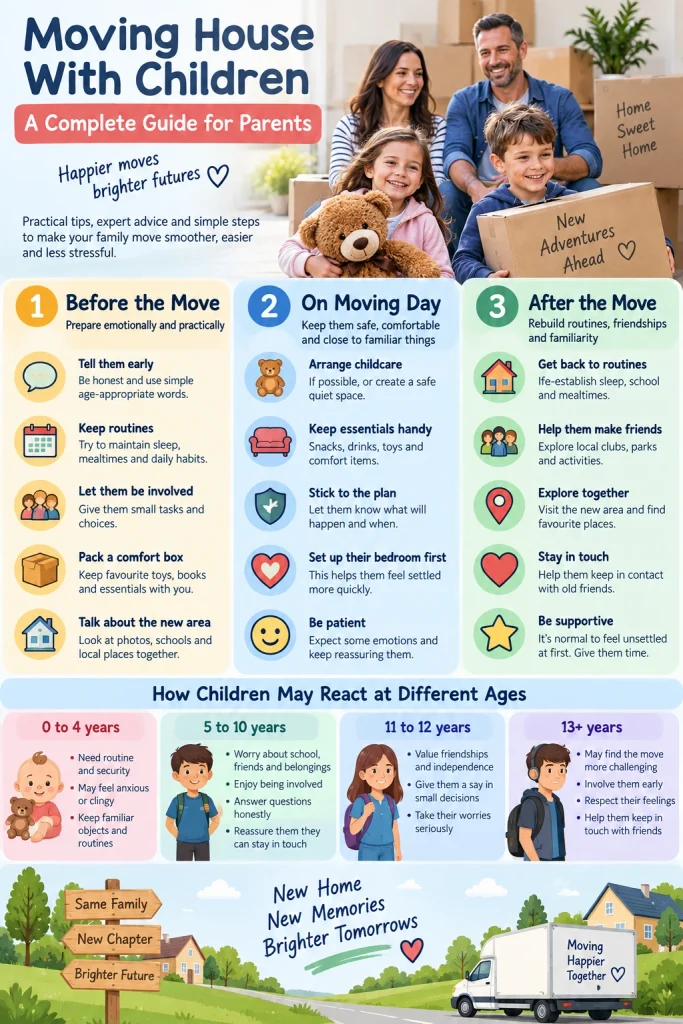
The whole thing falls into three simple stages. Before the move, you prepare them emotionally and practically. On moving day, you keep them safe, comfortable and close to familiar things. After the move, you rebuild routines, friendships and familiarity. This guide walks through all three, drawing on the many family moves we handle around Aylesbury.
what is the best way to move house with children?
Tell your children early and honestly, keep their daily routine steady, involve them in small age-appropriate ways, and pack a comfort box to keep with you rather than in the van. On moving day, arrange childcare or a safe quiet space, and set up their bedroom first. Expect some wobbles for a few weeks and be patient. Honesty, routine and comfort are what help a child feel secure.
At a glance
- Tell them early, in simple honest words
- Keep routines, especially sleep and mealtimes, steady
- Let them help in small, age-appropriate ways
- Pack a comfort box to keep with you
- Sort childcare for moving day
- Set up their bedroom first
- Explore the new area and reassure them that feeling unsettled is normal
Why moving house can be difficult for children
For adults, a move is a to-do list. For a child, home means safety, friends, their school and their bedroom, so a move can feel like losing all of that at once. Younger children often cannot picture what is coming, which can be frightening, while older children may miss friends and a familiar routine. Some upset is a normal part of the process and usually passes with support.
It helps to be reassured by what the evidence suggests. Some research links poorer outcomes mainly to repeated or frequent moves rather than to a single planned family move. A UK study in BMC Public Health found associations chiefly with moving several times in the very early years, not with moving in general. In other words, many children adjust well to one well-handled move when they get consistent support.
How can moving house affect a child’s emotional development?
For many children, a single supported move has no lasting effect on emotional development, and some find it a positive adventure. In the short term you may see clinginess, disturbed sleep or a return to younger behaviour, which are normal reactions to change. Some research suggests that longer-term difficulty is more often linked to frequent or stressful moves and to changing schools repeatedly, rather than to one planned move, though findings vary between studies. The protective factors, which are within your control, are steady routines, warm reassurance and keeping familiar people and comforts close.
How children react to moving house at different ages
Children experience a move differently depending on their stage, so it helps to match your support to their age. The table gives the quick version, and the notes below add detail.
| Age | Main concern | What helps most |
|---|---|---|
| 0 to 4 | Routine and security | Familiar objects and steady routines |
| 5 to 10 | School, friends, belongings | Involvement and reassurance |
| 11 to 12 | Friends and independence | Small choices and being heard |
| 13 and over | Friends, school and autonomy | Early involvement and some control |
Babies and toddlers (0 to 4). The youngest children do not understand the move, but they feel changes to routine and pick up on a parent’s stress. Keep feeding, naps and bedtime as normal as possible. If you are moving house with a 3 year old, expect some clinginess and keep their comfort items and bedtime routine going right through the move. Try not to add another big change, like swapping a cot for a bed, at the same time.
Primary age (5 to 10). These children understand more and often worry about friends, school and their bedroom. Involve them, answer questions honestly, and reassure them they can stay in touch with old friends.
Tweens (11 to 12). On the bridge to their teens, they value friendships and fairness. Give them a real say in small decisions and take their worries seriously.
Teenagers (13 and over). Teens can find a move especially hard, because friendships and independence matter so much. Involve them early, respect their feelings, and help them keep in contact with friends.
What is the hardest age for kids to move?
There is no universally hardest age for moving house. Teenagers may find it particularly difficult, because friendships, school, independence and identity can become especially important during adolescence, so leaving a familiar circle can feel like a real loss. Younger children usually cope well with change if their routines and comforts stay steady. In practice, how included and supported a child feels tends to matter more than their age.
How to tell your children you are moving
Tell your children as soon as the move is fairly certain, rather than letting them overhear it. Choose a calm moment, use simple honest words suited to their age, and share the positives without dismissing their worries. Explain what will stay the same: that you are all going together, that their toys are coming, and that they will still see the people who matter. Then let them ask questions, and keep answering them over the following days as new worries surface. Early honesty builds trust and removes the fear of the unknown.
How to prepare children for the move
Preparation is where much of the worry melts away. Visit the new home together if you can, or explore it online with photos, a virtual tour or a look at the street. If the move is nearby, walk or drive past so it becomes familiar. Talk about where their bed and toys will go and what fun things are close by. Keeping familiar belongings, rather than replacing everything with new furniture at once, can help a child feel at home sooner. If you are decluttering, do it gently and well ahead of moving day so it does not feel like their things are vanishing in the rush.
Books about moving house for children
Stories are one of the best ways to prepare younger children, because they show a happy move from a child’s point of view. Sharing a moving house book for toddlers in the weeks before you go helps normalise what is coming and gives you a gentle way to talk about feelings. Well known children’s books about moving house in the UK include Topsy and Tim Move House, the Usborne First Experiences Moving House title, and the Berenstain Bears Moving Day. Your local Aylesbury library is a good place to borrow a few and read them together at bedtime.
Age-appropriate jobs children can do when moving
Giving children a job helps them feel involved and reassures them their things are coming too. Match the task to their age.
Toddlers can choose which toys go in their special box and drop soft toys into a carton. Primary age children can label their own boxes, pack their books, and choose decorations for their new room. Tweens can sort their belongings, decide what to keep, and plan their new bedroom layout. Teenagers can pack their own room, choose what to take, and help plan how their new space will look. Keep the jobs light and praise the help, so it feels fun rather than a chore.
Moving-day bag vs first-night box
It helps to pack two separate things. A moving-day bag holds what your child needs during the day itself, such as snacks, water, a favourite toy, a tablet and a change of clothes, and it stays with you in the car. A first-night box holds what they need once you arrive and settle for the evening. Keep both out of the removal van so they are always within reach.
Child’s first-night box
Pyjamas
Change of clothes
Toothbrush
Favourite toy
Comfort blanket
Nightlight
Snacks and water bottle
Bedtime book
Nappies and wipes
Any essential medication
Our full first night box guide covers everything else the family will want that first evening.
Childcare on moving day
Moving day is busy, with open doors, heavy furniture and a van coming and going, so the safest plan is to arrange childcare. A grandparent, friend or trusted babysitter caring for young children away from the action keeps them safe and calm and lets you focus on the move. If they need to stay with you, set up one safe, quiet room with their comfort box, snacks and a tablet, well away from the loading. Pets are usually happier out of the way too.
Should children be there on moving day?
It depends on their age and temperament. Some children feel more secure seeing the day happen, so they understand where their things have gone, which can reassure younger ones. Others, busy toddlers especially, do better spending the day with a familiar adult and arriving once the beds are in. Many families choose a middle path, with children cared for during the heavy lifting and arriving in time to see their new room set up. Do whatever keeps your child calm and safe.
Set up your child’s bedroom first
Before you tackle the rest of the house, make up your child’s bed and set out their familiar things, so they have a recognisable space from the first night. Keeping the same bedding, a similar layout and even the same wall colour can help, because familiar surroundings are reassuring. A child who settles to sleep in a room that feels like theirs tends to find the rest of the change easier.
How to keep children’s routines during a move
Children feel safe through routine, so protect the anchors of the day: sleep, meals and bedtime rituals. Keep them as close to normal as you can, both during the move and once you arrive, and try not to layer other big changes on top, such as potty training, at the same time. If routine slips in the busy days, steer gently back to the usual pattern as soon as you are in. Early bedtimes help while everyone is tired.
Helping children say goodbye to their old home
A proper goodbye helps a child move on. Take photos of each room, the garden and the front of the house, and pop them in a little album your child can look at whenever they miss it. You might hold a small farewell, let them leave a friendly note for the new family, or have a last play in the garden. Saying goodbye to friends matters too, so swap contact details and plan how they will keep in touch.
How to help children settle into the new home
Once you are in, focus on making the house feel like home. Unpack their room first, keep routines steady, and explore the new area together so it starts to feel familiar. Rather than trying to see everything at once, pick one simple local outing to begin with. If they are starting a new school or club, help them make those first connections. A calm grounding trick can help an anxious child in a new place: ask them to name three things they can see and three they can hear, then wiggle three parts of their body, which brings their attention back to the present. Keep reassuring them that feeling a bit unsettled at first is completely normal.
How long does it take a child to adjust?
Most children settle within a few weeks to a few months, though every child is different. You may see wobbles, disturbed sleep or clinginess in the early weeks, which usually ease as routines return and the home becomes familiar. There is no fixed timeline, so the aim is not to rush it but to keep daily life predictable and warm. If your child is still very distressed after several months, it is worth a gentle chat with their school or GP for extra support.
Moving house and changing schools
For many parents this is the biggest worry, so plan it early.
When should you contact the new school? As soon as your move is confirmed. Places for a school year already under way are handled through in-year admissions and depend on availability and catchment. For families moving in or around Aylesbury, school places and admissions are managed by Buckinghamshire Council, so start there. For under-fives, arrange a new nursery or childcare place in good time too.
How do you help your child prepare? Visit the new school together beforehand if you can, and keep home routines steady so school is the only new thing they face at once.
What if they are worried about making friends? Reassure them it takes a little time, arrange a first playdate where you can, and help them join a club or activity they enjoy, which is often the quickest route to new friendships.
Updating your GP, dentist and other records
Alongside school, register the children with a new GP and dentist near your new home if you are moving out of your current area, as places can take time to arrange. It is easiest to do this at the same time as your other address changes, which our change of address checklist sets out in full.
Moving while pregnant or with a newborn
If you are expecting or have a new baby, be extra kind to yourself. Keep your hospital notes, baby essentials and feeding kit easy to reach rather than packed away, avoid heavy lifting, and accept all the help you are offered. Booking a removals team to do the lifting and packing is well worth it at this stage, so you can rest and focus on your baby.
What if your child does not want to move?
It is very common for a child to say they do not want to move, and it usually comes from fear of the unknown rather than the move itself. Listen properly, name their feelings, and avoid brushing their worries aside. Explain the reasons simply, focus on things they might look forward to, and give them some control through small choices, like picking their room colour or where their bed goes. Most reluctance softens once the new home starts to feel familiar and fun.
Signs your child may be finding the move hard
Some unsettled behaviour is a normal part of adjusting and usually passes with time and reassurance. You might notice changes in sleep, clinginess, mood swings, going back to younger habits, or being quieter than usual. Meet these with patience, extra cuddles and steady routines. If the signs are severe or last well beyond a few months, or your child seems very low, speak with their school or GP, who can offer support. Trust your instincts as a parent.
What NOT to do when moving house with children
A few things make a move harder. Try not to spring the news at the last minute or let children overhear it first, throw away their belongings without involving them, replace everything familiar with new furniture all at once, or pack their room first and unpack it last. And try not to let your own stress spill over, since children take their cue from you.
Before, during and after checklist
Before the move
Tell the children early and honestly
Read books about moving together
Visit or explore the new home and area
Sort the new school, nursery, GP and dentist
Let them help pack in small ways
Pack a comfort box and moving-day bag
On moving day
Arrange childcare or a safe quiet room
Keep the comfort box in the car
Keep meals and bedtime near normal
Set up their bedroom first
After the move
Unpack their room and keep routines steady
Choose one simple local outing to start
Help them settle at school and make friends
Be patient and reassure them
Our 5 C’s of moving with children
A simple way to remember the whole approach is our own 5 C’s framework. Communicate honestly and early. Connect by giving them time and involvement. Continue their routines and familiar comforts. Give them a sense of Control through small choices. And surround them with Comfort from favourite things and a room set up first. Keep those five in mind and you will cover most of what a child needs during a move.
Want to make moving day easier for your family?
The biggest gift you can give an anxious child on moving day is a parent who is not frazzled. Shiftify Removals can handle the packing, lifting and transport while you focus on helping your children through the day. We are a local Aylesbury team offering house removals and packing, with a clear price agreed up front. Get a free quote when you are ready.
FAQs
How do you prepare a child for moving house?
Tell them early and honestly, read books about moving together, visit or explore the new home, let them help pack in small ways, and keep familiar comforts close. Preparation and reassurance remove the fear of the unknown.
What is the hardest age for a child to move house?
There is no universally hardest age. Teenagers may find it particularly difficult because friendships and independence matter so much in adolescence, but how included and supported a child feels matters more than their age.
How long does it take children to adjust after moving?
Most settle within a few weeks to a few months, and some early wobbles are normal. If distress is severe or lasts well beyond that, speak with their school or GP.
How do you make moving house less stressful for children?
Tell them early, keep routines steady, involve them in small decisions, keep favourite belongings accessible, plan childcare for moving day, and set up their bedroom first.
Should children help pack?
Yes, in small age-appropriate ways like packing their own toys or labelling boxes. It helps them feel involved and reassures them their things are coming too.
Should children be present on moving day?
It depends on their age and nature. Younger children are often best with a trusted adult during the heavy lifting, arriving once their room is ready, while some older children feel calmer seeing the day happen.
What should I pack for my child?
A moving-day bag for the journey and a labelled first-night box with pyjamas, a change of clothes, toiletries, comfort toys, a nightlight, snacks and their bedtime book, both kept in the car.
How do you move house with a toddler?
Keep their routine and comfort items steady, avoid other big changes at the same time, arrange childcare for the day, and set up their room first. Expect some clinginess and be patient.
How do you move house with teenagers?
Involve them early, respect their feelings, give them a say, and help them stay connected with friends. Feeling heard makes a big difference.
How do you help a child adjust to a new school?
Sort the place early through the council, visit beforehand if you can, arrange a first playdate, and keep home routines steady so school is the only new thing they face at once.