

Moving house is stressful for us, but for a cat or dog it can be bewildering. Pets do not understand why their world is being packed into boxes, and they read the change in routine, smells and space as something to worry about. The good news is that with a calm plan, familiar comforts and a safe space on the day, most pets settle happily into a new home within a couple of weeks.
The whole journey for cats and dogs, from the admin to sort weeks ahead to keeping them safe on the day and helping them settle in. It is written for UK moves, whether you are moving across Aylesbury or further afield.
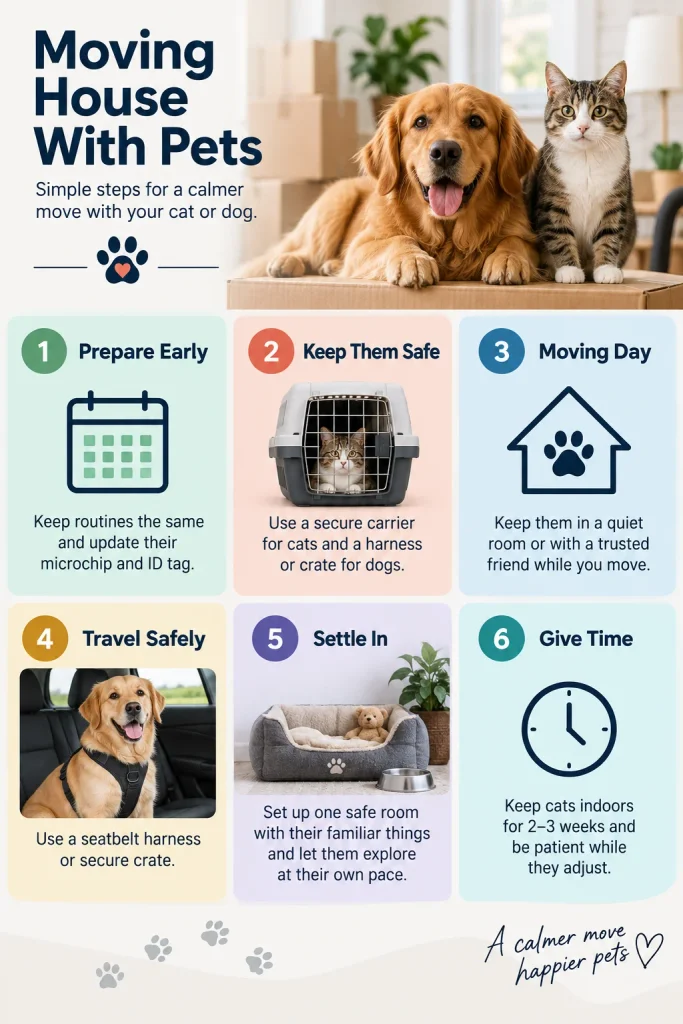
How do you move house with a pet?
Keep your pet’s routine steady in the run up, update their microchip details and ID tag, and register with a vet near your new home. On moving day, settle them in one quiet room with the door shut and a clear note on it, or leave them with a friend for the day. Travel with cats in a secure carrier and dogs in a harness or crate. At the new home, set up one safe room first with their familiar, unwashed bedding, and let them explore at their own pace. Keep cats indoors for two to three weeks.
At a glance
- Keep routines and familiar smells steady before the move
- Update the microchip and ID tag in advance
- Register with a vet near the new home
- Use one safe room on moving day, or pet-sit elsewhere
- Travel safely: carrier for cats, harness or crate for dogs
- Set up a safe room first at the new home
- Keep cats indoors for two to three weeks
Moving house with pets: timeline
A calm move is a planned one. Here is when to do what.
2 to 4 weeks before. Update your pet’s microchip address and ID tag, register with a vet near the new home, and ask your current vet for a copy of medical records. If your pet is anxious, ask about a calming pheromone diffuser to start using now.
1 week before. Buy or dig out a sturdy carrier or travel crate and let your pet get used to it. Arrange pet-sitting for moving day if you can, and stock up on their usual food so nothing changes at the other end.
Moving day. Keep your pet in one closed, clearly labelled room, or with a friend. Feed and walk at the usual times, and pack their bed, bowls and toys last.
First 24 hours. Set up a single safe room in the new home with their familiar things, and let them come out in their own time. Stay close and keep things quiet.
First 2 to 3 weeks. Get back to normal routines, let them explore the house one room at a time, and keep cats indoors until they have bonded with the new home.
Why is moving house stressful for cats and dogs?
Cats and dogs are creatures of habit and territory. Your current home is their safe space, mapped by familiar smells and sounds, so packing it up and moving somewhere new removes everything they rely on at once. Dogs often pick up on your stress and busyness, while cats, who are especially territorial, can find a new space unsettling until they have claimed it as their own. A little odd behaviour around a move is normal, and it passes with patience and routine.
Before the move
Microchip and ID
Getting identification right is the most important job, and it is the law. Under the Microchipping of Cats and Dogs (England) Regulations 2023, dogs must be microchipped from eight weeks of age and cats from twenty weeks, and you must keep your contact details up to date on an approved database. Update your address as soon as your move is confirmed, and check your pet’s collar tag shows a current phone number. Out of date details are the single biggest reason lost pets are not reunited with their owners.
Vet records
Ask your current vet for a copy of your pet’s vaccination and medical records, and find and register with a vet near your new home so you are covered from day one. If your pet takes medication, make sure you have enough to cover the move and the first few weeks.
Keep their routine
The kindest thing you can do is keep daily life as normal as possible for as long as possible. Feed and walk at the same time, and keep beds, bowls and favourite toys exactly where they always are until the last moment. Familiarity is what keeps a pet calm while everything else changes.
Packing around pets
Leave their bed, bowls, toys and litter tray out until the very end, and pack them last so they are first out at the other end. Do not wash their bedding before the move, because the familiar scent is exactly what helps them feel safe in a strange place. Keep cleaning products and anything hazardous sealed and out of reach while boxes are open. If packing around a nervous pet feels like too much, our packing and unpacking service can take that off your plate.
What to do with your pet on moving day
Moving day is the riskiest time for pets, because of open doors, strangers and constant movement. The safest option is to leave your dog or cat with a friend, relative or a cattery or kennels for the day, so they miss the noise entirely. If they must stay with you, settle them in one quiet room with the door shut, their bed, water, toys, a familiar blanket, and a litter tray for cats. Put a clear note on the door so nobody opens it by mistake, and tell everyone helping you where the pet is. Keep to their normal feeding times, and a good walk first thing helps a dog burn off nervous energy.
How to travel safely with a cat or dog
Travel with your pet secured and comfortable. Cats should go in a sturdy, well ventilated carrier with a familiar, unwashed blanket inside. Dogs should be secured with a harness and seatbelt clip or in a fixed crate. Feed only lightly a few hours before travelling to avoid an upset tummy, and keep the car calm with low voices and quiet radio.
One rule matters above all: never leave a pet alone in a parked car or van, even for a few minutes, because vehicles heat up dangerously fast. On a longer journey, perhaps one of our long distance moves, plan a quiet stop to offer water and a comfort break for the dog, and keep cats in the carrier throughout.
What to pack in your pet’s moving-day bag
Pack a small bag of pet essentials to keep with you, not in the van, so everything is to hand on the day and the first night.
A day’s food and treats
Bowls and bottled water
Any medication
Lead, harness or carrier
Poo bags or a litter tray and litter
A familiar, unwashed blanket and a favourite toy
Cleaning wipes and kitchen roll
Vet and microchip details
Pheromone spray if your pet uses one
Setting up a safe room at your new home
When you arrive, resist the urge to give your pet the run of the whole house. Set up one quiet room first, away from the front door and the busiest areas, with their bed, bowls, water, toys, litter tray and that familiar unwashed bedding. Carry them straight to this room, let them come out of the carrier in their own time, and leave the door shut so their world is just this one calm space at first. Once they seem settled and confident, let them explore the rest of the home gradually, one room at a time, rather than all at once.
How long does it take a pet to settle?
Most cats and dogs start to relax within a few days and feel at home within two to three weeks, though every pet is different. In the early days you may see out of character behaviour, such as hiding, clinginess, whining at night or the odd toilet accident, which usually fades as routine returns. Spend plenty of time with them at first and try not to leave a dog alone for long stretches in the first few days, which helps prevent separation anxiety. If worrying behaviour continues beyond a few weeks, have a chat with your vet.
Moving house with a dog
Dogs take their lead from you, so a calm, upbeat manner reassures them. Keep walks, feeding and play on their usual schedule, and be around as much as you can for the first week to ease any separation worries. Explore the new neighbourhood together with short, frequent walks so the area becomes familiar, and reward calm behaviour with praise and treats. A little night-time whining or a few accidents are common at first and usually settle with patience and a return to routine.
Moving house with a cat
Cats are all about territory, so let them reclaim a sense of ownership slowly. Keep them in the safe room at first, surrounded by their own scent, and let them explore further only when they choose to. Keep your cat indoors for at least two to three weeks so they bond with the new home before going out, as letting them out too soon is the most common reason cats get lost after a move. When the time comes, let them out hungry just before a meal so they learn to come home, and check the microchip and tag are up to date first.
Moving with multiple pets
More pets means more planning. Give each cat its own settling space for the first few days, because even bonded cats can turn tetchy after the stress of a move, then reintroduce them gradually. A useful trick is scent swapping: rub each cat with a separate cloth and place it in the other’s room, so they get used to each other’s smell again before meeting face to face. With multiple dogs, keep their routines and walk them together as normal, and give a nervous dog extra reassurance.
What if your pet escapes?
If your pet slips out during the upheaval, act quickly and calmly. Cats usually hide nearby, so check sheds, garages, bushes and under cars close to home first, and call them at quiet times like dusk. For the wider search, the RSPCA advises reporting your pet missing to your microchip database straight away, contacting local vets, animal hospitals and rehoming centres, registering the loss on Animal Search UK, and posting in local social media groups. For a lost dog, contact your local council’s dog warden, and if you think your pet was stolen, tell the police. This is exactly why keeping the microchip and tag up to date before the move matters so much.
Common mistakes to avoid
A few slip-ups make a move harder than it needs to be. Letting a cat outside too soon often leads to a lost cat trying to return to the old home. Washing familiar bedding before the move removes the comforting scent, so leave it as it is for now. Forgetting to update the microchip and tag leaves a wandering pet hard to reunite with you. And underestimating the stress, even for a normally laid back pet, catches people out, so plan for a nervous pet and you will usually be pleasantly surprised.
Do’s and don’ts
Do keep routines steady, update the microchip early, use one safe room, keep bedding unwashed, and travel with pets secured.
Don’t let cats out too soon, leave a pet alone in a parked vehicle, wash away familiar smells, skip the vet registration, or give your pet the run of the whole house on day one.
Moving to Aylesbury with a pet
If you are settling into Aylesbury with a dog, getting to know the local green spaces quickly helps them feel at home. Short, regular walks around spots like Vale Park or the canal towpath let your dog build a familiar routine, and there are plenty of dog friendly routes into the surrounding Buckinghamshire countryside once they have settled. Register with a local vet early so you are covered from day one, and keep those first walks short and close to home while your pet finds its feet.
How Shiftify can help with your move
The less chaos on moving day, the calmer your pet will be, and that is where a professional team helps. Shiftify Removals can handle the packing, lifting and transport quickly and smoothly, so there is less noise and disruption for an anxious cat or dog, and more time for you to reassure them. We are a local Aylesbury team offering house removals and packing, with a clear price agreed up front. Get a free quote when you are ready.
FAQs
How do I prepare my pet for moving house?
Keep their routine steady, update the microchip and ID tag, register with a vet near the new home, and keep their familiar unwashed bedding and toys to hand. Ask your vet about a calming pheromone diffuser if your pet is anxious.
What should I do with my pet on moving day?
Either leave them with a friend, relative or a cattery or kennels for the day, or settle them in one quiet room with the door shut, their bed and water, and a note on the door so nobody lets them out.
Do I legally have to update my pet’s microchip when I move?
Yes. In England you must keep your contact details up to date on the microchip database, so update your address as soon as your move is confirmed, along with your pet’s collar tag.
How do I travel safely with my cat or dog?
Use a secure, ventilated carrier for cats and a harness or crate for dogs. Feed lightly beforehand, keep the car calm, and never leave a pet alone in a parked car or van.
How long does it take a pet to settle after moving?
Most settle within two to three weeks. Some early hiding, clinginess or accidents are normal and usually fade as routine returns. Speak to your vet if worries persist.
When can I let my cat outside after moving?
Keep your cat indoors for at least two to three weeks so they bond with the new home, then let them out hungry just before a meal so they learn to come back.
What should I do if my pet escapes during the move?
Check nearby hiding places first, then report your pet missing to the microchip database, contact local vets and rescues, register on Animal Search UK, post in local groups, and call the dog warden for a lost dog.
Should I wash my pet’s bedding before the move?
No. The familiar scent is what helps them feel safe, so leave bedding and toys unwashed until your pet has settled into the new home.