

Packing is the part of moving house most people underestimate. Not because it is complicated, but because it takes significantly longer than anyone expects. A 3-bedroom house with a garage and a loft is a two to three full day job for two adults packing efficiently. Most people start too late and end up throwing everything into bin bags the night before.
If you would rather hand the whole thing over, our professional packing service covers everything from materials to placement.
[Get a free fixed-price quote including packing — takes 15 minutes by video call]
What order should you pack rooms in when moving house?
Start with what you use least. End with what you use every day.
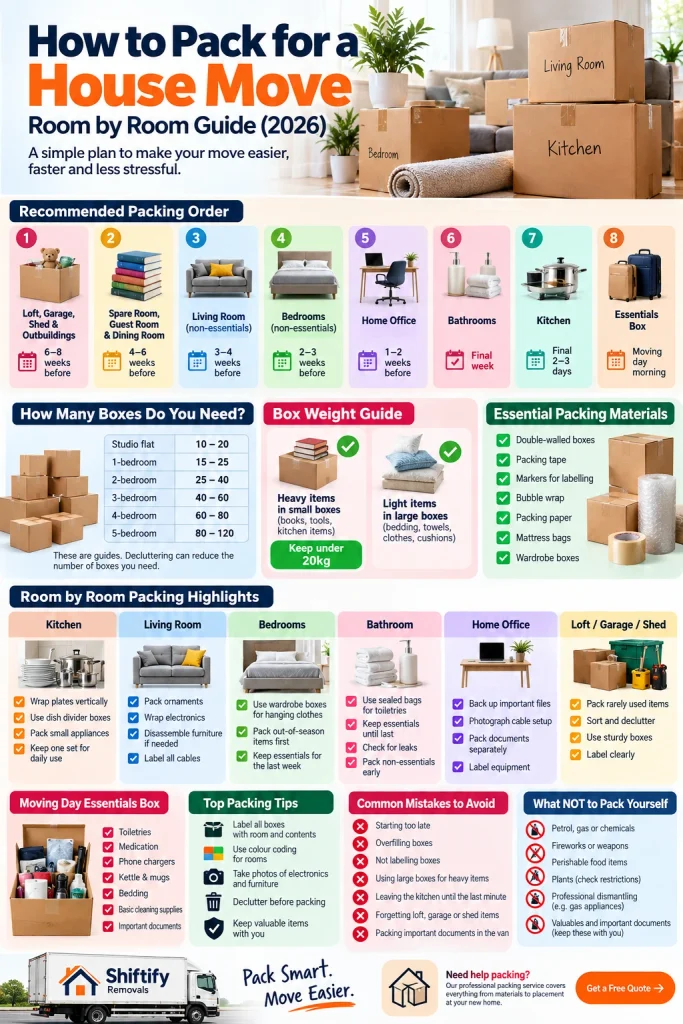
| Order | Room or area | When to pack |
|---|---|---|
| 1 | Loft, garage, shed, outbuildings | 6 to 8 weeks before |
| 2 | Spare room, guest room, dining room | 4 to 6 weeks before |
| 3 | Living room (books, ornaments, non-essentials) | 3 to 4 weeks before |
| 4 | Bedrooms (seasonal and non-daily items first) | 2 to 3 weeks before |
| 5 | Kids rooms | 1 to 2 weeks before |
| 6 | Home office | 1 to 2 weeks before |
| 7 | Bathrooms | Final week |
| 8 | Kitchen (non-essentials first, essentials last) | Final 2 to 3 days |
| 9 | Essentials box | Moving day morning |
When should you start packing for a house move?
Six to eight weeks before for a 3-bedroom house. Eight weeks is not too early if you have a full loft and garage.
The biggest mistake we see consistently is treating packing as a moving-week job. By the time you reach the final week, most of your home should already be packed. Only the kitchen, the main bathroom, and daily-use items should still be out.
The 6 to 8 week timeline:
Six to eight weeks before: Declutter first. Charity shops, skip, or sell. Then start on loft, garage, shed, and outbuildings.
Four to six weeks before: Spare rooms, guest room, dining room, books, ornaments, and out-of-season clothes.
Two to four weeks before: Living room (except TV and sofa), bedrooms (seasonal clothes and non-daily items first).
Final week: Home office, bathrooms, kids rooms.
Final two to three days: Kitchen, keeping one set of everything out for daily use.
Moving day morning: Essentials box, last items (kettle, chargers, toiletries, bedding).
How to pack a house in 7 days
Not everyone has six to eight weeks. If you have one week left, here is a realistic daily plan.
Day 7 (first day): Declutter fast, then loft, garage, shed. Pack everything aggressively. This is not the day for wrapping individual ornaments.
Day 6: Spare rooms, dining room, storage areas.
Day 5: Living room (books, ornaments, shelves, non-daily items).
Day 4: Bedrooms (seasonal clothes, non-daily items, then the rest).
Day 3: Home office, bathrooms, kids rooms.
Day 2: Kitchen non-essentials. Keep one set of everything out.
Day 1 (day before): Kitchen essentials, bathroom last items, final boxes.
Moving day morning: Essentials box, kettle, chargers, toiletries, bedding for the first night.
For a last-minute move, the priority is getting your belongings on the van safely. Perfect organisation at the other end can come later. A professional packing team can pack an entire home in a single day if needed.
How many boxes do you need for a house move?
| Property size | Typical box count |
|---|---|
| Studio flat | 10 to 20 |
| 1-bedroom flat | 15 to 25 |
| 2-bedroom home | 25 to 40 |
| 3-bedroom house | 40 to 60 |
| 4-bedroom house | 60 to 80 |
| 5-bedroom house | 80 to 120 |
A decluttered 3-bedroom house might need 40 boxes. One with a packed loft and full garage might need 80. Buy more than you think. Unused boxes can be returned or recycled.
How heavy should a moving box be?
Keep boxes under 20kg. The rule is: heavy items in small boxes, light items in large boxes.
| Box size | What goes in it |
|---|---|
| Small | Books, tools, tins, crockery, heavy kitchen items |
| Medium | Kitchen equipment, toys, files, small appliances |
| Large | Bedding, cushions, duvets, towels, clothes |
How to tell if a box is too heavy:
- You cannot lift it comfortably with both hands
- The bottom flexes when picked up
- The tape is starting to separate
- Books or tools are filling a large box
- You would not want to carry it up a flight of stairs
The removal crew carry dozens of boxes in a day. Boxes over 20kg cause injuries and slow the whole job down. One of the most common things our team sees is large boxes packed entirely with books. They look manageable when sealed. They are not.
What packing materials do you need?
Essential:
- Double-walled cardboard boxes in small, medium, and large
- Packing tape and a good tape dispenser
- Permanent markers for labelling
- Bubble wrap for fragile items
- Packing paper or plain newsprint (coloured ink transfers onto items)
- Mattress bags
- Wardrobe boxes for hanging clothes
Optional but useful:
- Coloured tape or stickers to colour-code rooms
- Vacuum storage bags for duvets and pillows
- Stretch wrap for furniture and drawers
- Dish divider boxes for glasses and mugs
- Sealable plastic bags for loose small items
Do not use newspaper to wrap anything you care about. The ink transfers onto items and is hard to clean off china and glassware.
How to pack the loft, garage, and shed
These go first because they hold the most forgotten items and the most hazardous things.
Loft: Anything untouched in three years is a candidate for donating or skipping. What does come down needs specific labels. “Loft” on a box tells you nothing at the other end. “Christmas decorations,” “baby clothes,” and “spare duvet covers” tell you exactly where each box should go.
Garage and shed: Drain fuel from lawnmowers, strimmers, and any other petrol tools before moving day. Petrol and gas cannot travel in a removal van. Do this early, not on moving morning.
Pack tools in small sturdy boxes. Wrap sharp items in rags and ensure they cannot pierce the box.
Loft and garage packing checklist:
Loft: Christmas decorations, suitcases, seasonal clothing, stored furniture, children’s old toys, sentimental items, spare bedding, books not in regular use.
Garage: Tools, gardening equipment, sports equipment, DIY supplies, car accessories, bicycles (deflate tyres slightly for transit).
How to pack the spare room and dining room
Spare room: Pack systematically, label specifically. Seasonal items, extra bedding, and stored clothes all go now.
Dining room: The table and chairs are for the removal crew. Your job is sideboards and display cabinets. China, glassware, and serving dishes need wrapping. Use packing paper or bubble wrap per item and fill gaps so nothing can move.
How to pack the living room
Books: Small boxes only. A medium box of books is already around 15kg.
Ornaments and photo frames: Wrap each individually in packing paper. Pack tightly, fill gaps with scrunched paper. Mark Fragile on two sides.
TV and screens: Use the original box if you kept it. If not, buy a proper TV box. Wrap the screen in a blanket first. Pack the TV upright, never flat.
Cables: Photograph the cable setup behind the TV and entertainment unit before unplugging anything. This one step saves significant time at the other end. Bundle cables with ties and label each one.
Sofas: These are for the removal crew. Tell the surveyor at the survey stage if any sofas need disassembling to fit through a doorway.
How to pack bedrooms
Two passes: seasonal and non-daily items first (four to six weeks before), then daily-use items in the final week.
Clothes: Wardrobe boxes let hanging clothes travel hanging, saving ironing time. For folded clothes, large boxes or strong bin bags work well for items that do not crease.
Bedding: Large boxes or vacuum storage bags. Pack bedding last so it is one of the first things you find at the new home.
Mattresses: Mattress bags protect against dirt, moisture, and scuffs in transit. Worth using for every mattress.
Drawers: Light clothing in drawers can usually travel in the drawer if the piece is being moved intact. Remove anything heavy or breakable.
How to pack kids rooms
Involve them early. Let each child choose a small box or bag of favourite toys and books to keep with them during the move, not on the van. This is their own box and it stays with them throughout moving day.
Pack everything else two weeks before. Group toys by category so they can be unpacked in the same order: building toys together, puzzles and games together, soft toys together. Write the category on the label.
Books: Heavy. Small boxes only.
Leave their bed set up and bedding accessible until the morning. The first night in a new home is unsettling for children. A familiar bed assembled and made at the other end makes a real difference.
How to pack the home office
Computers and monitors: Use original packaging where possible. Otherwise wrap each screen in bubble wrap and pack with foam padding on all sides. Back up your data before the move.
Cables: Photograph setups before unplugging. Bundle and label all cables.
Files and documents: Important documents (passports, contracts, insurance papers, mortgage documents) travel with you personally, not on the van.
How to pack the bathroom
Bathrooms are quick to pack but easy to underestimate. Leave this until the final week.
Liquids: Every bottle and container with liquid goes in a sealed plastic bag before boxing. Shampoo, cleaning products, and toiletries leak when pressurised or tipped.
Medicines: Keep medicines with you during the move, not on the van.
Towels: Useful as padding for fragile items from other rooms.
How to pack the kitchen
The kitchen is the most time-consuming room in the house. After 20,000 moves, we have never seen a customer overestimate how long the kitchen takes. Most underestimate it significantly.
Timeline: Start non-essentials three days before the move. Keep one mug, one plate, one pan, and enough cutlery for the household out until moving morning.
Plates: Pack vertically, like records, not flat. Wrap each plate individually in packing paper. Vertical plates are significantly less likely to break under the weight of the box above. This is the single technique that makes the biggest difference to crockery surviving a move.
Glasses and mugs: Use box dividers where possible. Wrap each glass individually. Nest mugs only if the same size and both wrapped.
Pots and pans: Nest smaller inside larger. Line the bottom with crumpled paper. Wrap lids separately.
Cutlery tray: Wrap the whole tray with cling film or stretch wrap and pack flat. It travels as one piece and unpacks as one piece.
Knives: Wrap each knife in a tea towel and pack lying flat, never pointing upward. Mark the box.
Food: Start using up the freezer and pantry from six weeks before. Defrost the freezer 24 hours before and dry the inside thoroughly before loading.
The washing machine drum bolt: This is the single most forgotten item in a house move. The drum bolt holds the drum still in transit. Without it, the drum moves freely, which can cause significant internal damage. Refit it before the machine is moved. If you no longer have it, contact the manufacturer before moving day.
Gas appliances: A gas cooker or hob must be disconnected by a Gas Safe registered engineer before moving. This is a legal and safety requirement. Book the engineer well in advance. The same applies for reconnection at the new home.
Kitchen packing checklist: Plates, bowls, glasses, mugs, pots, pans, baking trays, small appliances (toaster, kettle, blender, coffee machine), pantry non-perishables, utensils, cutlery tray, oven trays and dishes, food storage containers.
How to pack fragile items
Fragile items need a consistent method regardless of which room they come from.
The method: wrap, cushion, place, fill, test, label.
- Wrap each item individually in packing paper or bubble wrap
- Cushion the bottom of the box with crumpled paper or folded towels
- Place heavier items at the bottom, lighter items on top
- Fill all gaps with scrunched paper so nothing can move
- Test by gently shaking the box. If you hear movement, add more padding
- Label Fragile on all four sides, not just the top
By item type:
Plates: vertical, individually wrapped. Glasses and mugs: box dividers preferred, individually wrapped. Ornaments and ceramics: individually wrapped, tightly packed. Mirrors and picture frames: wrap in bubble wrap and blankets, pack upright in a box marked Fragile, never flat. Lamps: wrap the base in bubble wrap, pack the shade separately in a large box with padding around it.
How to prepare furniture for a house move
Furniture preparation prevents damage and makes loading faster.
- Empty all drawers before the furniture moves
- Remove shelves from bookcases and wardrobes and wrap them separately
- Protect corners with corner protectors or folded cardboard
- Wrap furniture with blankets or stretch wrap before it leaves the room
- Secure doors and drawers with stretch wrap so they cannot open in transit
- Dismantle flat-pack furniture that is large or fragile, keeping all screws in a labelled bag taped to the piece
- Photograph complicated furniture before dismantling
- Measure large furniture and doorways at both properties. The time to discover a sofa will not fit is before moving day, not during it
What you should not pack yourself
Do not put these on the van:
- Petrol, diesel, gas bottles, paint, solvents, aerosols, fireworks, and any flammable or corrosive materials
- Opened food
- Live plants (they travel best in your own car)
- Pets (always travel with you)
These require a qualified professional:
- Gas cooker or hob: must be disconnected and reconnected by a Gas Safe registered engineer
- Washing machine: drum bolt must be refitted before transit
What to keep with you on moving day
Some things should never go on the van. Keep these with you personally.
Important documents: Passports, birth certificates, property contracts, mortgage documents, insurance documents, solicitor correspondence.
Valuables: Jewellery, cash, expensive electronics, irreplaceable items.
Personal essentials: Medication for you and the household, phone chargers, toiletries for the first night, glasses or contact lens supplies.
Children’s essentials: Favourite toys or comfort items (the treasure box), snacks, drinks, a change of clothes, nappies if applicable, school items if needed the next day.
Pet essentials: Food, water, medication, lead or carrier, a familiar blanket, ID details. Plan pet transport before moving day, not on it.
What goes in the essentials box?
The essentials box travels with you, not on the van. Pack it on moving day morning.
Per person:
- One change of clothes and sleepwear
- Phone charger and portable battery pack
- Toiletries: toothbrush, toothpaste, soap, deodorant
- Any medication needed that day or overnight
For the household:
- Kettle, tea, coffee, mugs, milk
- A few plates, glasses, and cutlery
- Toilet paper for each bathroom at the new property
- Bin bags
- Basic cleaning supplies for wiping surfaces before unpacking
- Snacks and water for the day
- The TV remote
- Keys to the new property once received
- A torch
How to label moving boxes properly
Label every box on at least two sides, not just the top. Boxes stack. You cannot see the top once they do.
Every label should include:
- The destination room at the new home
- A brief contents summary: “Kitchen: plates and bowls” is more useful than “Kitchen”
- “Fragile” on all four sides if heavily breakable
- A number if you are keeping a packing inventory
Colour coding by room makes unloading faster. One colour of tape per room means the removal crew can put boxes in the right room without reading every label.
Moving day final checklist
Before leaving, check these areas. People forget areas more often than boxes.
- Loft checked
- Garage checked
- Shed checked
- Garden and outbuildings checked
- Every cupboard and wardrobe opened
- Under beds checked
- Fridge and freezer empty and dry
- Washing machine drum bolt refitted
- Meter readings taken (gas, electricity, water)
- Essentials box loaded into your car, not the van
- Important documents with you personally
- Phone chargers with you
- Keys collected or ready to hand over
- Windows and doors checked
Common packing mistakes to avoid
These are the ones our team sees most often across 20,000 moves.
- Starting too late. The most common. Start at least six weeks before for a 3-bedroom house.
- Packing without decluttering first. You are paying to move things you do not want. Declutter before you pack, not after.
- Making boxes too heavy. Especially books in large boxes. Heavy items in small boxes only.
- Labelling only the top. Label two sides of every box.
- Mixing rooms in one box. Keep all items from one room in boxes for that room only.
- Forgetting the essentials box. Not having access to basic items at the new home on the first night.
- Packing important documents on the van. Passports and contracts travel with you personally.
- Forgetting the washing machine drum bolt. The single most forgotten item.
- Not photographing electronics before unplugging. Photograph every cable setup first.
- Leaving the kitchen entirely to moving morning. The kitchen takes longer than every other room. Start three days before.
- Not checking restricted items. Petrol, gas, paint, and solvents cannot go on the van.
- Not measuring large furniture and doorways. Discover this before moving day, not during it.
- Forgetting the loft, garage, shed, and outbuildings. These are regularly left to last despite being the largest and most complex areas.
- Packing children’s favourite items on the van. Keep them accessible throughout the day.
- Not defrosting the freezer in advance. It needs 24 hours and must be completely dry before loading.
How to pack fragile items: what to do if the box will be in storage
If any boxes are going into storage before reaching the new home, fragile items need extra care. Double-box anything valuable: wrap the item, place it in a correctly sized inner box, then place that box inside a larger outer box with padding on all sides. Label the outer box with both Fragile and Do Not Stack.
Keep a clear inventory of what is in storage so you know what you are waiting for. Our storage service holds belongings safely and delivers when you are ready.
Should you use a professional packing service?
You do not have to pack everything yourself. A professional packing service means the removal team uses proper materials and trained techniques throughout, reduces damage risk on fragile items, and saves significant time.
Partial packing, where you pack non-breakable everyday items and the crew handles fragile and specialist items, is the most popular balance of cost and convenience.
Full packing adds approximately £200 to £600 to your removal cost depending on property size. For a full cost breakdown, see our removal cost guide.
What should you unpack first at the new home?
Unpack in this order to make the first night and first morning manageable.
- Cleaning supplies — wipe down surfaces before anything goes on them
- Toiletries and bathroom basics — make at least one bathroom functional immediately
- Bedding — make the beds before you start anything else
- Kettle, tea, coffee, mugs — the most important step
- Children’s essentials — toys, comfort items, bedtime routine items
- Pet supplies — food, water, familiar bedding
- Kitchen basics — one set of plates, glasses, and cutlery
- Work essentials — laptop, charger, anything needed the next morning
- Remaining rooms — in the order that makes your daily routine work
Everything else can wait. The goal of the first night is a bed made, a bathroom working, and a kettle boiled.
Frequently asked questions
What should I pack first when moving house?
The rooms and areas you use least: the loft, garage, shed, and outbuildings. Then spare rooms, guest rooms, and the dining room. Work toward rooms you use daily and leave the kitchen and essentials until the final days.
How long does it take to pack a house?
A 1-bedroom flat takes one to two days for two adults. A 3-bedroom house takes two to three full days. A 4-bedroom house with a full loft and garage can take three to five days. Start six to eight weeks before the move.
How heavy should moving boxes be?
Keep boxes under 20kg. Heavy items like books go in small boxes. Light bulky items like bedding and cushions go in large boxes.
How do I pack plates for moving?
Pack plates vertically, standing on their edges like records, not flat. Wrap each individually in packing paper first.
Can I pack clothes in suitcases?
Yes. Suitcases are ideal for clothes, especially heavy or bulky items. They are easy to carry and make good use of space in the van.
Can I use bin bags for moving clothes?
Yes for clothes that do not crease easily. Label the bag with the room and contents. Do not use bin bags for fragile items, heavy items, or anything that needs to stay together.
Should I empty drawers before moving?
Remove heavy and breakable items. Light non-breakable clothing in drawers can usually travel in the drawer if the furniture is being moved intact.
How do I pack a TV for moving?
Use the original box if you have it. If not, buy a proper TV box. Wrap the screen in a blanket first. Pack the TV upright, never flat. Photograph the cable setup before unplugging.
How do I pack mirrors and picture frames?
Wrap in bubble wrap and blankets. Pack upright in a box, never flat. Mark Fragile on all four sides. Do not stack other boxes on top.
How do I pack a washing machine?
Refit the drum bolt before it is moved. Without it, the drum moves freely in transit and can be damaged. If you no longer have the bolt, contact the manufacturer before moving day.
What should I not put on the removal van?
Petrol, gas, paint, fireworks, solvents, and hazardous materials. Opened food. Live plants and pets. Cash, jewellery, passports, and important documents. Gas appliances must be disconnected by a Gas Safe registered engineer first.
What should I pack in an overnight bag for moving day?
One change of clothes, sleepwear, toothbrush and toiletries, phone charger, medication, and any other personal essentials. Keep this with you throughout the day, not on the van.
Should I pack the garage and shed?
Yes, and pack them first, six to eight weeks before the move. These areas are regularly left to last despite often containing the most items and the most hazardous materials.
Can removal companies pack everything for me?
Yes. A full packing service covers everything from materials to placement at the new home. A partial packing service covers fragile and specialist items while you pack everything else. Ask us for a quote when you book your survey.
How do I pack a house in one day?
Focus on getting belongings on the van safely rather than perfect organisation. Pack in order: loft and garage, spare rooms, living room, bedrooms, office, bathrooms, kitchen basics. Build the essentials box last. A professional packing team can assist on the day.
Ready for moving day?
Start early, declutter before you pack, work room by room, keep boxes under 20kg, label everything on two sides, and keep your essentials with you personally. Do not attempt gas disconnections yourself, and do not forget the washing machine drum bolt.
If you are moving in or around Aylesbury, Reading, Oxford, Maidenhead, Slough, Southampton, Surrey, or Brighton, we can help with the whole move or just the packing.
[Get your free fixed-price packing and removal quote — takes 15 minutes by video call, no obligation]